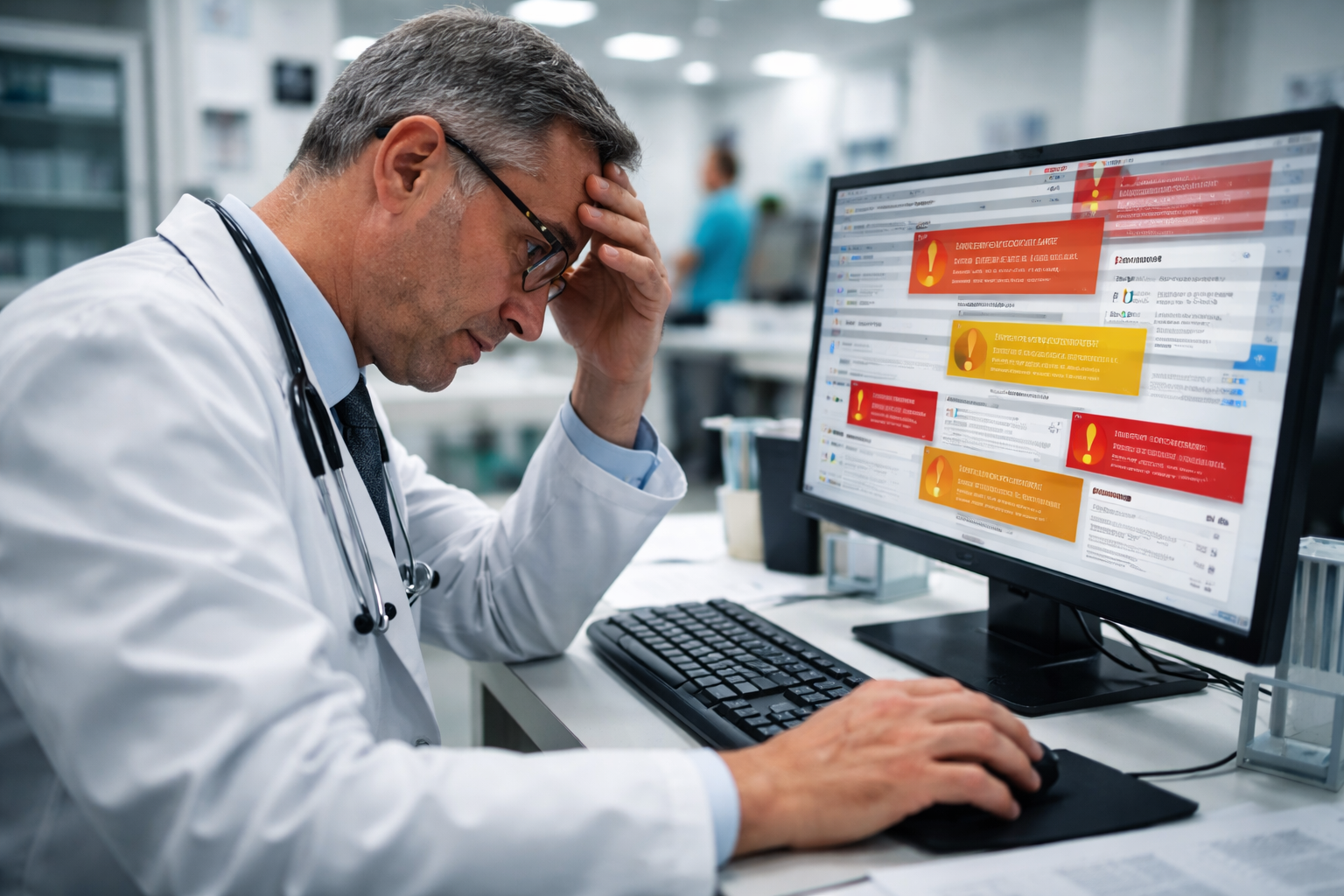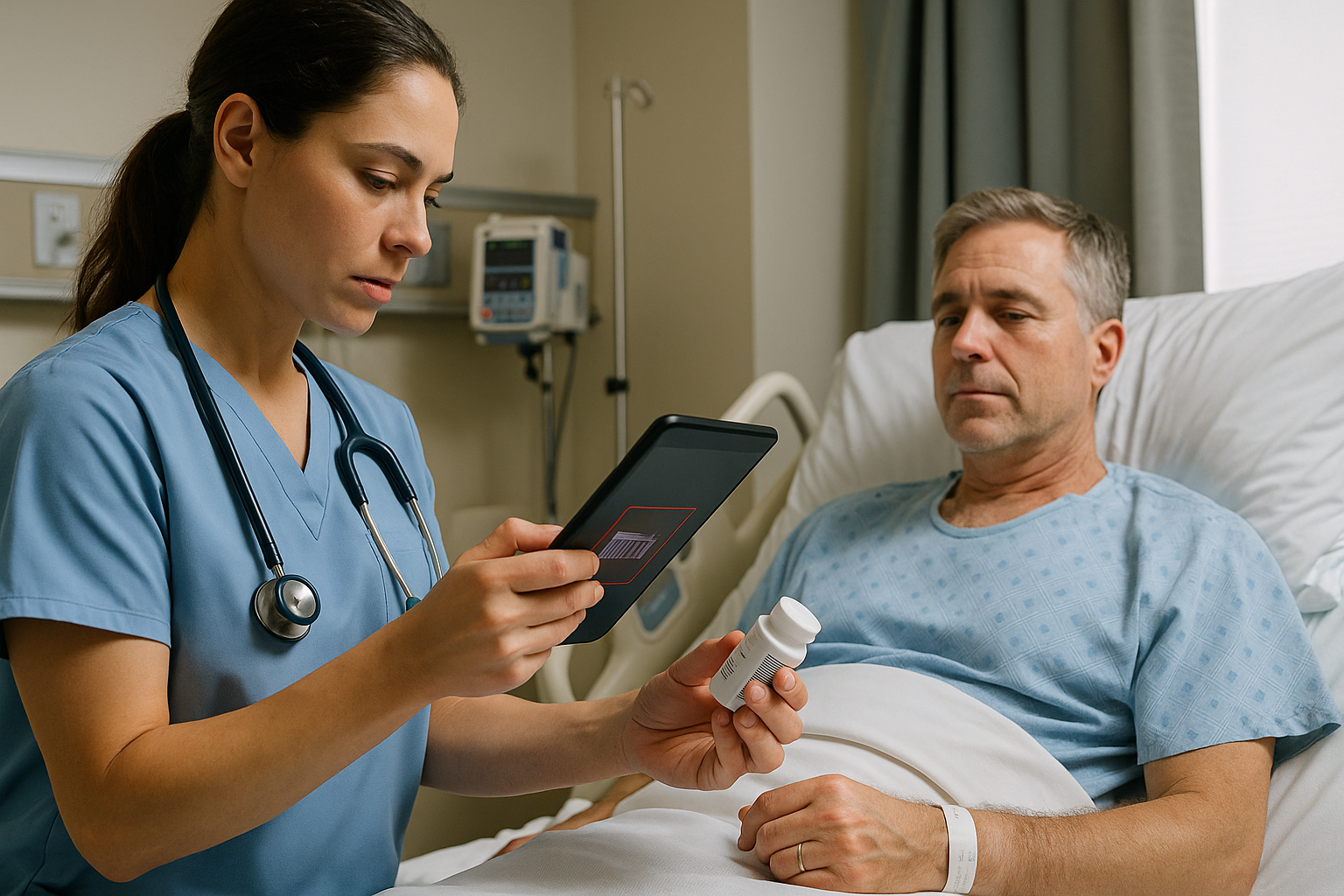


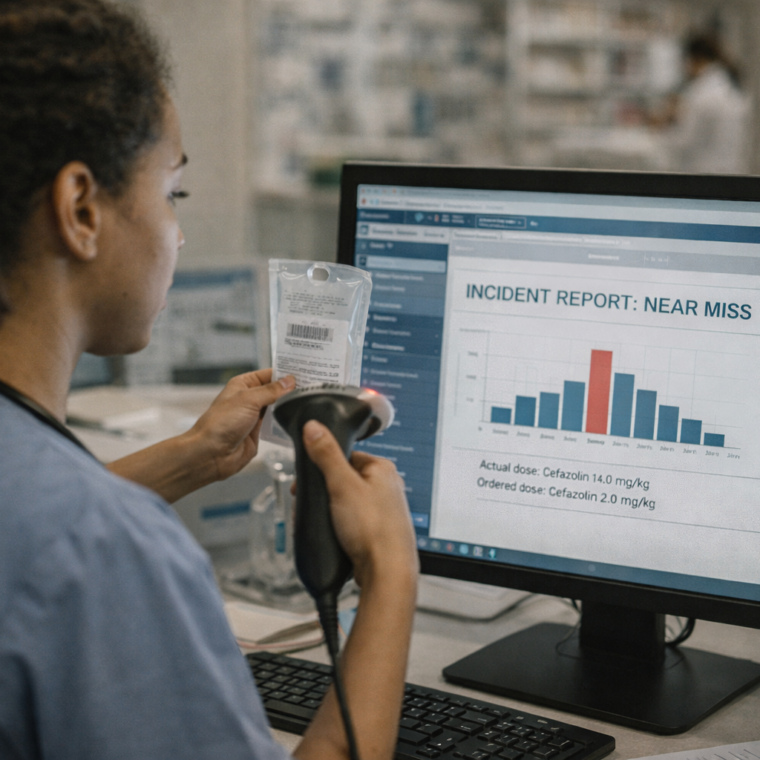

At 7:08 p.m., a nurse is about to administer an antibiotic.
Something feels off—the dose looks high. She double-checks, confirms with
pharmacy, and the order is corrected “at the last second.” No harm. No headline.
The shift moves on.
In a traditional hospital, that becomes a throwaway anecdote: “Good catch.”
In a digital hospital, that moment is gold: a near miss is a dress rehearsal for a
tragedy… and it just gave you permission to fix the system without paying the
price in patient harm.
First: define a near miss (no poetry, just reality)
AHRQ (through its Common Formats for patient safety event reporting) describes
near misses / close calls as safety events that did not reach the patient. (PSO)
PSNet (AHRQ) explains it similarly: a near miss is an event that could have caused
harm but didn’t, because it was intercepted before it reached the patient (or was
stopped in time). ( PSNet )
Translation: nothing happened… but the system still failed. A human just saved it
(this time).
The thesis: traditional hospitals analyze tragedies; digital hospitals analyze
“scares”
Healthcare is trained to react hard when there’s severe harm. For example, The
Joint Commission defines a sentinel event as a safety event resulting in death,
permanent harm, or severe temporary harm. (Joint Commission)
That’s critical… but it’s also late.
A near miss offers something a severe event never can: system improvement
without human cost.
The WHO is clear about the value of reporting and learning systems: capturing
near misses is an opportunity to implement solutions before harm occurs. In
other words, near-miss reporting allows you to improve without waiting for damage.
(Organización Mundial de la Salud)
Translation: if you only investigate when there’s blood on the floor, your model is
reactive by design.
Why near misses matter: they reveal where the system breaks most often
In safety science (inside and outside healthcare), a common framing is that severe
events are often preceded by many more minor events and near incidents. The “safety triangle” associated with Heinrich is frequently referenced many more
(and debated in terms of exact ratios). (PMC)
But the practical takeaway remains useful:
If you capture near misses, you find patterns. If you don’t, you repeat risk.
In medication safety specifically, near misses are especially valuable because
they’re often intercepted errors—they never reach the patient. Research
analyzing medication ordering errors using AHRQ definitions describes near
misses as intercepted errors that do not reach
the patient. (PMC)
The “digital autopsy”: how to analyze a near miss when you have data (not
just stories)
A digital autopsy isn’t a long meeting fueled by opinions. It’s a workflow.
1) Structured capture of the event
- What happened (category: medication, lab, identification, etc.)
- Where it happened (unit, service line, shift)
- Where it was intercepted (before reaching patient / at administration / etc.)
AHRQ Common Formats exist to standardize event elements so
organizations can compare and learn consistently. (PSO)
2) Process traceability
- Who entered the order / verified / dispensed / administered
- What changed and when (the “last-minute correction” signature)
3) Pattern analysis
- Is it the same medication?
- The same dose range?
- The same shift?
- The same workflow (ED, inpatient, pediatrics)?
4) System action
- Update protocols (default doses, hard stops, cross-checks)
- Targeted training (focused, not blanket)
- Workflow redesign (double verification, weight/age guardrails, etc.)
Blueprint: turning a “good catch” into institutional prevention (without
relying on heroes)
If you want your hospital to learn from near misses like a digital organization, you
need five blocks:
- Simple, non-punitive reporting
If reporting is hard, it disappears. If it’s safe, it becomes learning. The WHO
emphasizes the value (and limits) of reporting systems and the need to
interpret data carefully. (Organización Mundial de la Salud) - Standard classification (so you compare apples to apples)
Common Formats give you a shared language and structure. (PSO) - Workflow data—not only narrative
Because stories don’t scale, but patterns do. - Analytics focused on trends
One near miss is interesting. A repeating cluster is actionable. - Closing the loop (feedback to staff)
If people report and nothing changes, reporting dies.
Where HarmoniMD fits: from anecdotal near misses to measurable near
misses
This is where “digital hospital” vs “paper hospital” becomes concrete.
HarmoniMD: automated reporting + traceability
With a HIS that logs orders, edits, verifications, and timestamps, you can go
beyond “someone caught it” and answer questions like:
- Which medications are being corrected repeatedly right before
administration? - Which dose/weight/age combinations trigger last-minute adjustments?
- Which services or shifts concentrate similar near misses?
That kind of pattern detection lets you intervene before the first harm event
happens.
CLARA: faster detection and faster learning
A clinical copilot can help convert scattered signals into actionable
insights—summarizing patterns, flagging inconsistencies, and accelerating review
for clinical committees without weeks of manual extraction.
Translation: you move from “safety by heroes” to safety by system.
Conclusion: a near miss isn’t luck—it’s a discounted warning
Severe events deserve full investigation. But if your hospital only learns when harm
occurs, you’re operating in reactive mode.
The WHO underscores the value of reporting and learning systems—and highlights
that near misses let you implement solutions before harm reaches patients.
(Organización Mundial de la Salud)
AHRQ standardizes the concept: a near miss is a safety event that did not reach
the patient, but exposes a system vulnerability. (PSO)
A digital hospital performs autopsies where it matters most: on the scares.
Book a demo and turn “near misses” into real prevention
If you want to see how HarmoniMD + CLARA can help you detect near-miss
patterns, automate reporting, and convert “good catches” into protocol
improvements before a severe event happens book a demo. book a demo.