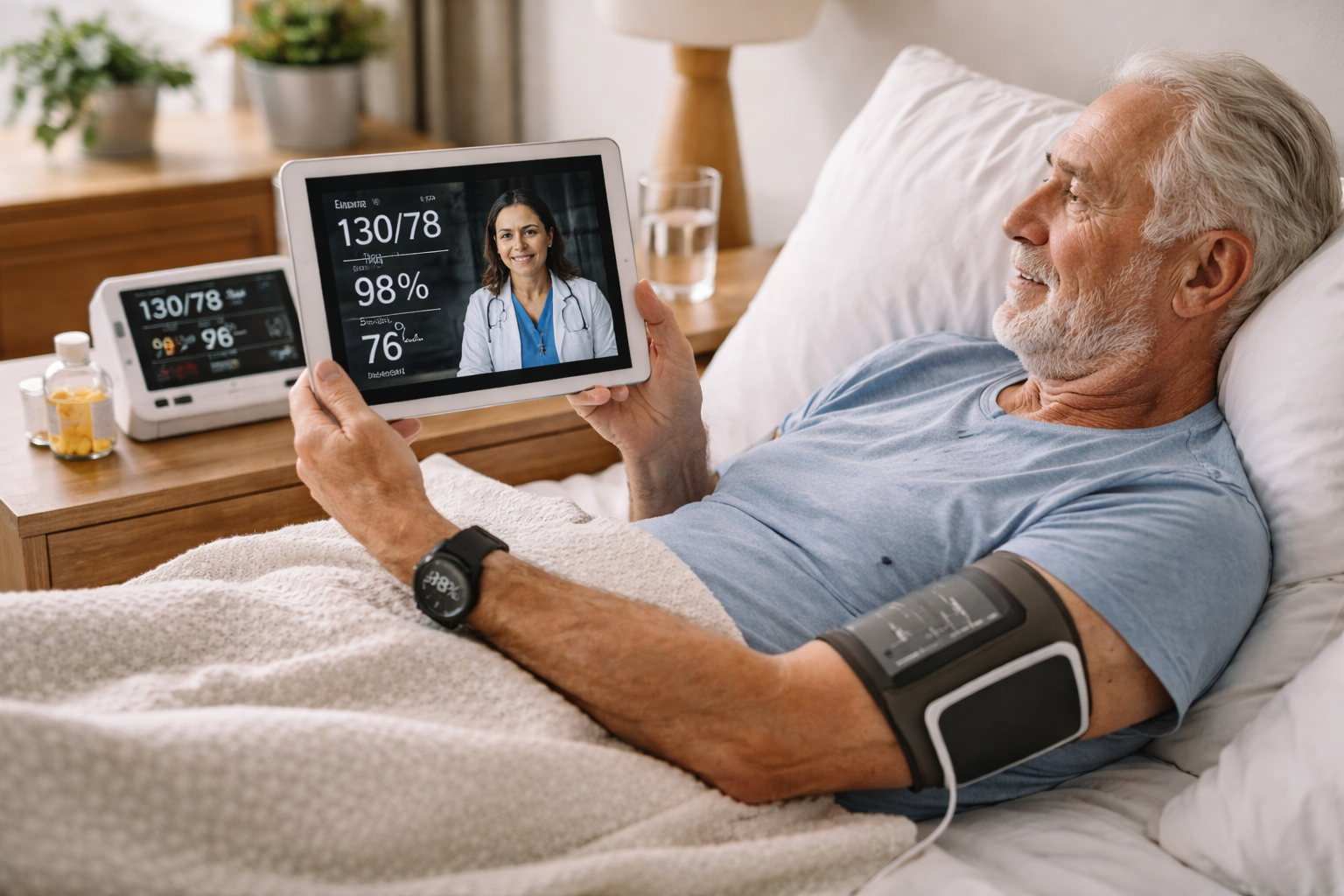


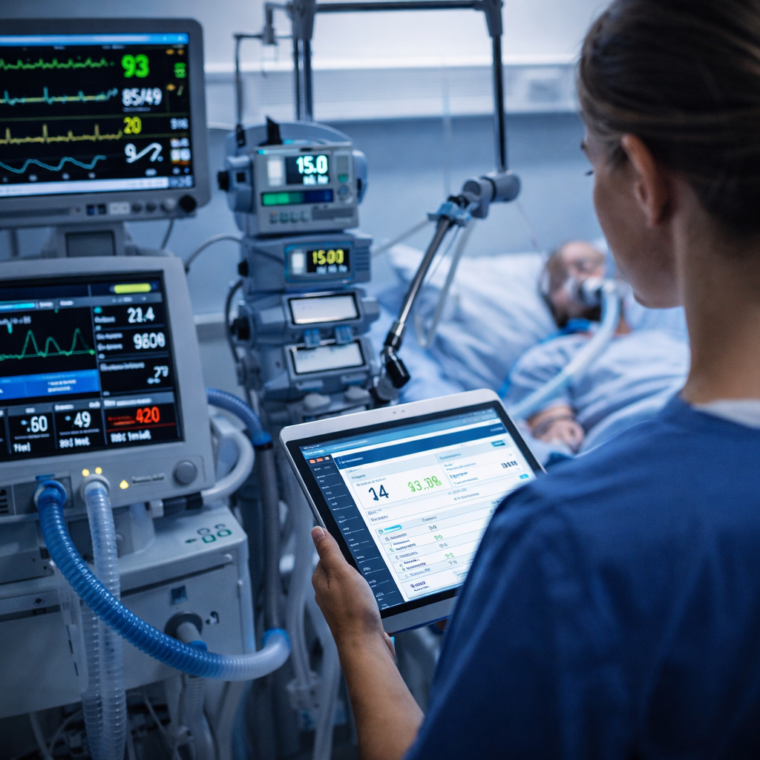

At 2:13 a.m., the ventilator already knows something the medical record still does not know.
At 2:13:04 a.m., the vital signs monitor has already recorded a drop.
At 2:14 a.m., a nurse looks at the screen, writes it down by hand or transcribes it later… and that is where the problem begins.
Because in a modern hospital, care no longer depends only on what the physician writes.
It also depends on what the devices “say”:
- vital signs monitor,
- ventilator,
- infusion pump,
- fetal monitor,
- laboratory equipment,
- and any biomedical source generating real-time clinical data.
If those devices do not communicate directly with the medical record, there is not only operational friction. There is also a gap in compliance, data integrity, and patient safety.
The regulatory compliance in LATAM is no longer just about “having an electronic medical record”
In the region, the regulatory and digital transformation conversation no longer revolves only around “digitizing” information. It now revolves around how that information is governed, protected, exchanged, and used.
PAHO states that, in order to improve health information systems in the Americas, it is necessary to explicitly prioritize standards and interoperability, as well as privacy, confidentiality, and data security (paho.org).
And within its 8 principles for the digital transformation of public health, PAHO once again places interoperability and the protection of rights/data at the center of digital health system design (paho.org).
Translation for Regulatory Affairs: it is no longer enough to “store data.” You have to ensure that it is complete, traceable, and useful across systems.
Translation for Biomedical Engineering: if device data does not properly enter the clinical ecosystem, the hospital is left with an incomplete truth.
The modern hospital cannot depend on human transcription as the bridge between devices and the medical record
Here is the uncomfortable point.
When a biomedical device is not integrated with the HIS/EHR, the flow usually looks like this:
1. the device generates the data,
2. someone looks at it,
3. someone interprets it,
4. someone writes it again in another system.
That “someone” is not middleware. It is a tired person, being interrupted, working in a critical care unit.
And the evidence says that comes at a cost.
An open-access JAMIA study found that, in manually entered point-of-care tests recorded in the EHR, 260 of 6,930 entries (3.7%) were discrepant compared to the actually interfaced result; in addition, there were significant errors and potentially dangerous transcriptions. The article concludes that electronic interfaces are the safest and most reliable method for transferring data from instruments to LIS/EHR systems (pmc.ncbi.nlm.nih.gov).
NIST summarizes it even more clearly: medical device interoperability enables fewer transcription errors and richer information so clinicians can manage their patients more effectively (nist.gov).
Translation: if the data comes out of the ventilator but enters the record by hand, you have an operational risk disguised as routine.
The real problem is not “connecting cables”; it is ensuring data integrity for the next audit
From the outside, integrating devices seems like a purely technical issue.
From the inside, it is a compliance issue.
Because when data passes through multiple hands before reaching the medical record:
- accuracy is lost,
- timeliness is lost,
- traceability is lost,
- and it becomes harder to demonstrate document integrity in quality or regulatory audits.
The FDA defines medical device interoperability as the ability to exchange and use information in a safe, secure, and effective manner between one or more devices, technologies, or systems. And it makes clear that this interoperability can reduce errors and adverse events (fda.gov).
AAMI and UL, for their part, published the ANSI/AAMI/UL 2800-1 standard precisely to address the safety, security, and effectiveness of systems with interoperable medical device elements (aami.org).
Executive translation: when the hospital connects devices to the medical record correctly, it does not just gain efficiency. It also strengthens the defensibility of the data.
What monitors, ventilators, and pumps “say” does matter… but only if the HIS can listen
A ventilator is not only for ventilating. It also generates data.
A pump is not only for infusing. It also generates events.
A monitor is not only for displaying vital signs. It can also be a primary source of clinical information.
The problem is that, as NIST explains, many devices still cannot communicate with each other or integrate with other systems in a plug-and-play way, even though they generate critical information multiple times per second (nist.gov).
And that is where the silent risk lies:
the data exists, but it does not live where it should live.
HL7/FHIR: the technical conversation that really does have clinical impact
This is where the issue stops being abstract “clinical informatics” and becomes
operations.
FHIR, according to HL7, is a next-generation framework designed precisely so that health systems can share data in a more implementable, modular, and usable way across different contexts, including server-to-server communication, exchange from EHRs, and large hospital environments (hl7.org).
And in 2026, HL7 launched Caliper, a new FHIR accelerator specifically focused on real-time medical device interoperability, recognizing that device data is growing and that its effective integration is key for care, analytics, and AI (blog.hl7.org).
Message for Biomedical Leadership: this is no longer a “future vision.” The standards ecosystem is moving exactly toward what your hospital is going to need more and more.
The hidden cost of not integrating: rework, clinical risk, and weak auditability
When devices do not talk to the medical record, the hospital pays three times:
1) It pays in time
Someone has to re-enter or reconcile the information.
2) It pays in risk
Manual transcription introduces discrepancies that can escalate into clinical error. The JAMIA study on manual point-of-care transcription showed clinically relevant discrepancies and reaffirmed the value of automated interfacing (pmc.ncbi.nlm.nih.gov).
3) It pays in compliance
In audits, manually transcribed data is harder to defend than data that is originated, transmitted, and traced automatically.
Real technical interoperability, not “decorative compatibility”
This is where HarmoniMD’s value proposition gains operational weight.
HarmoniMD describes integrations with HL7 standards and an architecture prepared to interoperate with other healthcare systems and ancillary services (harmonimd.com)
In addition, in its module and integration descriptions, HarmoniMD indicates compatibility with:
- LIS,
- PACS/RIS,
- and other systems and devices common in hospital environments, including infusion pumps and systems related to clinical operations (harmonimd.com)
That matters because true interoperability is not about putting a PDF into the
medical record. It is about ensuring that biomedical data:
- enters the right ecosystem,
- with the right structure,
- with traceability,
- and without unnecessary human re-entry.
Put simply: if the ventilator “speaks,” the HIS has to understand it.
6 questions Regulation and Biomedical should be asking today
1. What devices generate critical clinical data in your hospital, and how many of them are already integrated with the HIS?
2. What portion of the data is still being entered through manual transcription?
3. Can you demonstrate traceability of the data from the device to the medical record?
4. Does your platform use interoperable standards such as HL7/FHIR, or does it still depend on isolated developments?
5. Does the integration reduce clinical risk, or does it only “move files around”?
6. In an audit, could you defend the integrity, origin, and timeliness of biomedical data?
If several answers are uncomfortable, you do not just have a technology debt. You have a compliance debt.
In 2026, the medical record no longer ends where the physician’s note ends
The modern hospital depends on a network of real-time clinical data. And if that network does not include biomedical devices, the medical record is incomplete by design.
PAHO already identifies interoperability, security, and data governance as pillars of
digital transformation in healthcare (paho.org)
FDA and NIST make it clear that device interoperability can reduce errors and
improve system safety and effectiveness (fda.gov)(nist.gov).
And the evidence already shows that continuing to depend on manual transcription is not neutral: it creates real discrepancies (pmc.ncbi.nlm.nih.gov).
That is why the challenge is no longer just having an electronic medical record. The challenge is making sure your software can talk to ventilators, listen to monitors, and survive the next audit.
If you want to see how HarmoniMD can help you better integrate your clinical and biomedical systems, reduce manual transcription, and strengthen traceability for regulatory compliance, schedule a demo. We can review with you which data is currently “trapped” inside devices and how to turn it into useful, traceable, audit-
ready information within the HIS (harmonimd.com)